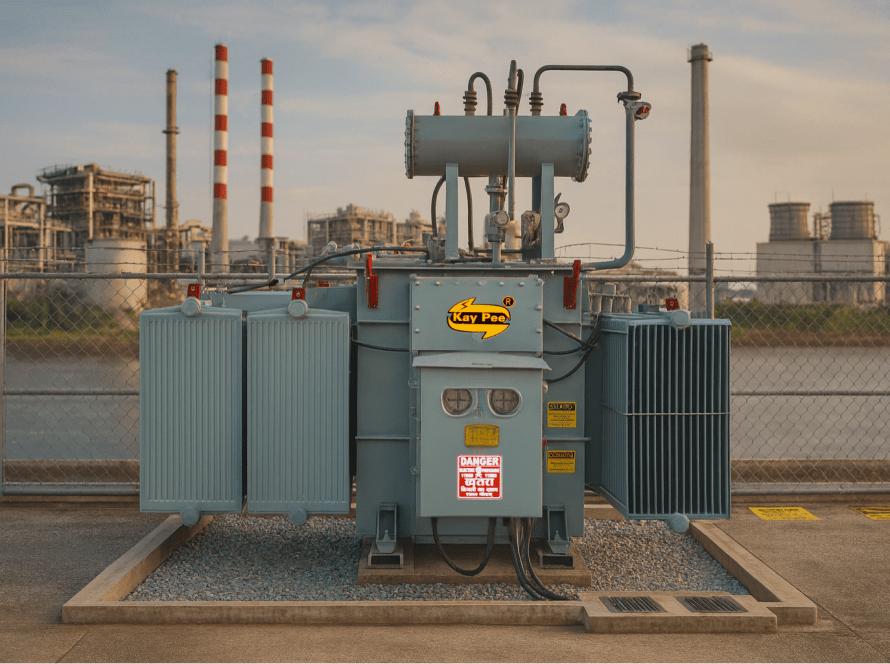
In the complex world of electrical engineering, transformers are considered the backbone of the power grid. For industries looking to optimize their electrical infrastructure, understanding the specific roles of different transformer types is essential. A common point of confusion for many facility managers and procurement officers is the distinction between a Power Transformer and a Distribution Transformer.
While both devices operate on the principle of electromagnetic induction, their applications, designs, and efficiency peaks are vastly different. This comprehensive guide by Kay Pee Transformers PVT. LTD. will break down these differences to help you make an informed decision for your industrial needs.
What is a Power Transformer?
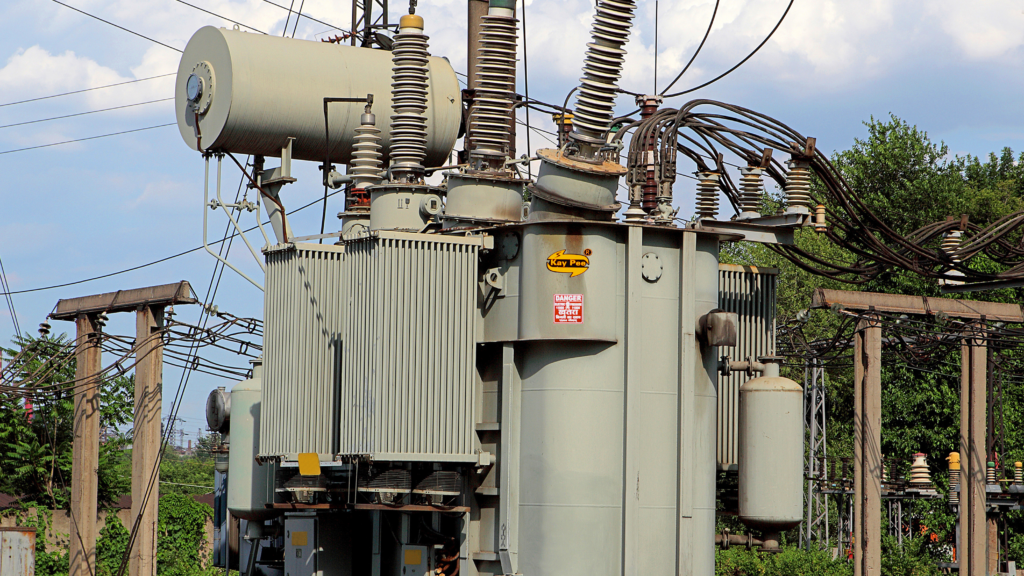
A power transformer is a heavy-duty electrical device designed to transmit high-voltage electricity across long distances. These are typically found in generating stations or transmission substations. Their primary goal is to “step up” voltage for efficient transmission or “step down” voltage for the initial stages of distribution.
Core Characteristics of Power Transformers
- High Voltage Handling: They are built to manage voltages typically above 33 kV.
- Maximum Efficiency: These units are designed to operate at 100% efficiency when they are at full load.
- Size and Scale: Due to the high insulation requirements, these transformers are significantly larger than distribution units.
What is a Distribution Transformer?
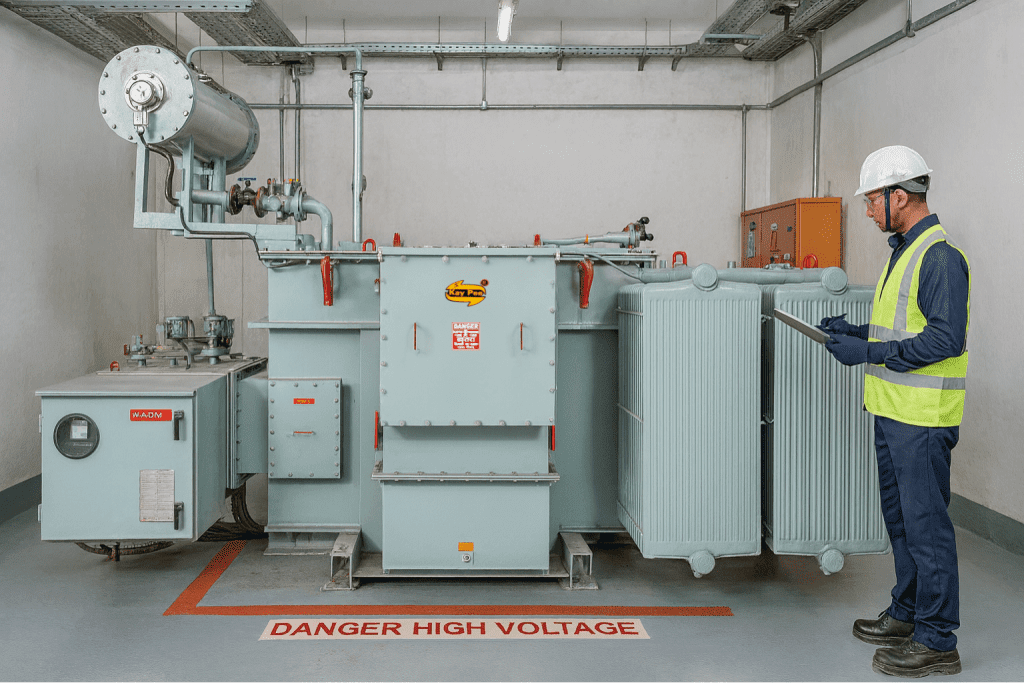
A distribution transformer is the final link in the electrical supply chain. It is used to “step down” the voltage to a level that is safe for end-users, such as residential buildings or small-to-medium industrial plants. If you see a transformer mounted on a pole or sitting in a small neighborhood cage, it is likely a distribution transformer.
Core Characteristics of Distribution Transformers
- Low Voltage Output: They provide the final voltage transition, usually 440V, 230V, or 110V.
- Variable Loading: Unlike power transformers, these units rarely run at full load. They are designed to handle fluctuating demands throughout the day.
- All-Day Efficiency: Their efficiency is optimized for 50% to 70% load, as they must remain energized 24/7 even when demand is low.
Power Transformer vs Distribution Transformer: Key Differences
To simplify the comparison, several technical and operational factors must be analyzed. Below is a detailed breakdown of how these two essential components differ.
Network Usage and Placement
Power transformers are utilized in the transmission network. They act as the bridge between the power plant and the main grid. In contrast, distribution transformers are placed in the distribution network. They serve as the bridge between the grid and the consumer’s facility.
Voltage Levels
The voltage range is a primary differentiator. To begin with, power transformers handle very high voltages ($V > 33 \text{ kV}$). In contrast, distribution transformers are designed for lower voltages. Their range typically spans from $11 \text{ kV}, 6.6 \text{ kV}, \text{ or } 3.3 \text{ kV}$ on the primary side down to $440 \text{ V}$ or $230 \text{ V}$ on the secondary side.
Ratings and Capacity
In terms of capacity, engineers measure a transformer’s power in Kilovolt-Amperes (kVA) or Megavolt-Amperes (MVA). Specifically, power transformers handle massive loads, often exceeding 200 MVA. In contrast, distribution transformers generally provide lower capacities, typically staying below 200 kVA, although some industrial units may go higher.
Load Fluctuations
A power transformer is subjected to a relatively constant load. It is managed by grid operators to ensure it stays within its peak efficiency range. However, a distribution transformer must endure extreme fluctuations. Demand peaks in the evening for residential areas or during work shifts for factories, and it drops significantly at night.
Design and Constructional Divergence
The internal architecture of these machines is dictated by their intended use. Because power transformers handle immense heat and electrical stress, their cooling systems and insulation are highly advanced.
Winding Connections
In most power transformers, the windings are connected in a Delta-Delta or Delta-Star configuration to handle high currents. Distribution transformers frequently use a Delta-Star connection. The “Star” connection on the secondary side is vital because it provides a neutral point, which is necessary for domestic and industrial single-phase or three-phase power.
Iron and Copper Losses
Specifically, engineers calculate efficiency based on power losses. In a power transformer, designers minimize copper losses (load losses) to ensure peak performance during full operation. In contrast, manufacturers keep iron losses (core losses) as low as possible in a distribution transformer. This happens because the core stays magnetized 24 hours a day, regardless of how much electricity the consumer actually uses.
Why Efficiency Matters for Industries
When selecting a transformer for an industrial plant, the “All-Day Efficiency” becomes a critical metric. For a power transformer, the focus is on how much power is lost during the heavy-lift transmission. For a distribution transformer, the focus is on the cumulative loss over a 24-hour cycle.
How to Choose the Right Transformer for Your Business
Selecting the wrong type of transformer can lead to equipment failure, high electricity bills, or safety hazards. Here is a step-by-step approach to making the right choice:
Identify Your Connection Point
Are you drawing power directly from a high-voltage transmission line? If so, a power transformer is required for your substation. Are you tapping into a local grid at 11kV? A distribution transformer is the correct choice.
Assess Your Load Profile
If your industry runs 24/7 with a steady, heavy machinery load, you need a unit built for high endurance. If your load varies based on shift timings, a distribution transformer with optimized partial-load efficiency is better.
Consider Space and Environment
Power transformers require significant space, specialized cooling foundations, and fire safety zones. Distribution transformers are more versatile and can be installed on poles or in small indoor rooms.
Maintenance Requirements
Maintenance protocols differ based on the criticality of the unit.
- Power Transformer Maintenance: These require frequent oil testing (Dissolved Gas Analysis), bushing inspections, and cooling system checks. Any downtime can affect the entire grid.
- Distribution Transformer Maintenance: These are often designed to be “low maintenance.” Periodic oil level checks and cleaning of the bushings are usually sufficient for a long lifespan.
Why Kay Pee Transformers PVT. LTD.?
At Kay Pee Transformers PVT. LTD., we understand that power is the lifeblood of your industry. Furthermore, we specialize in manufacturing high-performance Industrial Transformers that meet international standards of safety and efficiency.
Our Commitment to Quality
- Custom Design: We tailor transformer specifications to meet your unique industrial load requirements.
- Durability: Our units are built using premium grade CRGO steel and high-purity copper.
- Expert Support: From installation to routine maintenance, our team ensures your power supply remains uninterrupted.
Frequently Asked Questions (FAQs)
In contrast, can you safely operate a distribution transformer as a power transformer?
Specifically, you can boost your authority and your Yoast SEO score by replacing the passive ‘is not designed’ with active, direct language. In addition, using strong transition words instead of the indirect ‘it is not advisable’ will significantly improve your readability.
Option 1: Persuasive & Technical (Recommended)
“Technically, we do not advise this practice. Specifically, manufacturers do not build distribution transformers to handle the continuous high-load stress of a transmission network. Consequently, the unit would suffer from poor efficiency and likely overheat.
What is the lifespan of these transformers?
With proper maintenance, both types of transformers can last between 25 to 30 years. Quality of manufacturing is the biggest factor in longevity.
Specifically, why do engineers calculate distribution transformer efficiency at 50% load?
Because consumer demand is never constant. By optimizing efficiency at 50% load, manufacturers ensure that the average energy loss over 24 hours is minimized.
Conclusion
Distinguishing between a power transformer and a distribution transformer is vital for grid stability and industrial efficiency. Power transformers are the giants of long-distance transmission, while distribution transformers are the reliable workhorses of the local community and factory floor.
Selecting the right equipment ensures that your industry operates with minimal energy waste and maximum safety.
Because of this, at Kay Pee Transformers PVT. LTD., we provide the engineering excellence required to keep your operations powered. Therefore, if you are planning to upgrade your industrial power setup, simply contact Kay Pee Transformers PVT. LTD. today for a consultation and a quote on our high-efficiency transformer range.