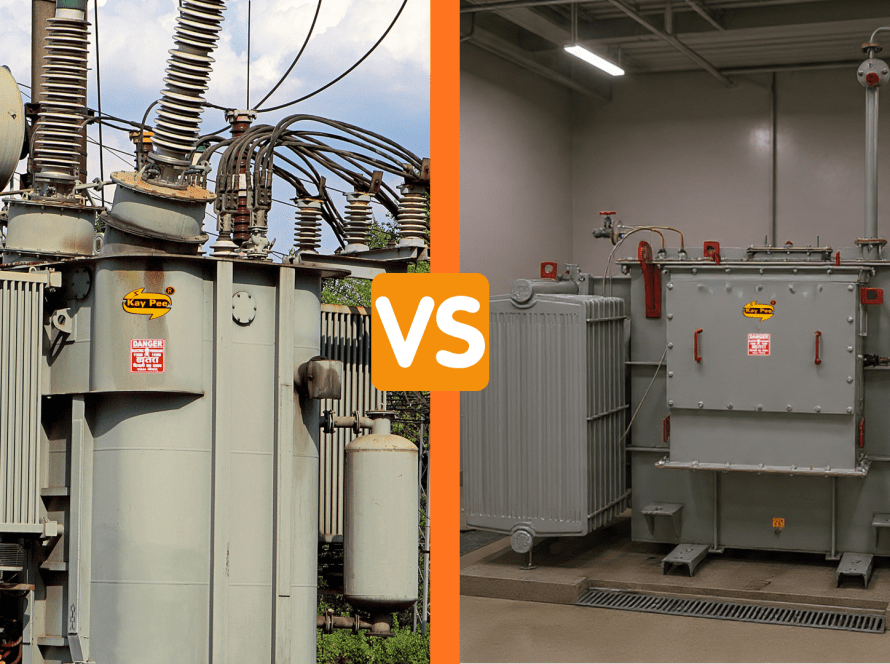
A distribution transformer is used to step down voltage levels. High voltage from transmission lines is reduced by it. Safe levels for homes, offices, and industries are provided. Electricity is distributed efficiently across India by these essential devices. Power reliability is ensured for millions.
What Is a Distribution Transformer? Key Basics
Distribution transformers are vital in electrical networks. Voltage is lowered by them from 11kV or 33kV to 433V or 250V. Medium voltage is converted to low voltage safely. Power is delivered to end-users with minimal loss. Two main types are used: oil-immersed and dry-type. Oil-immersed distribution transformers are popular in India for cooling efficiency.
These units are compact and durable. Standards like IS 1180 are followed. Capacities range from 25kVA to 2500kVA. Kay Pee Transformers Pvt. Ltd. designs them for Indian conditions.
Distribution Transformer Working Explained Step-by-Step
High voltage enters the primary winding first. Magnetic flux is created in the core by this current. Voltage is induced in the secondary winding. Low voltage is output for distribution. Oil or air cools the assembly. Heat is dissipated effectively.
Bushings insulate connections. Tap changers adjust voltage if needed. Breathers prevent moisture entry. Protection relays detect faults. Overcurrent is avoided automatically. Distribution transformer working is based on electromagnetic induction.
A cross-section view illustrates distribution transformer working clearly.
Types of Distribution Transformers Commonly Used
Pole-mounted distribution transformers are installed on poles. Rural electrification is supported by them. Ground-mounted units serve substations. Pad-mounted types are used in cities. Oil-immersed distribution transformers dominate due to reliability. Dry-type models are chosen for indoor safety.
Each type is selected based on location. Kay Pee offers all variants.
Uses of Distribution Transformer in India: Real-World Applications
Growing power needs are met by distribution transformers. Electricity is supplied to rural villages via pole-mounted units. Urban homes get 230V single-phase power. Three-phase supply powers factories.
- Agriculture: Irrigation pumps are run reliably.
- Industries: Steel plants and textiles use high-capacity models.
- Commercial: Malls and offices receive stable voltage.
- Residential: Apartments avoid blackouts.
- Institutions: Schools and hospitals stay powered.
Solar integration is rising. Distribution transformers handle renewable inputs. India’s grid expansion relies on them.
Benefits and Maintenance of Distribution Transformers
Efficiency up to 99% is achieved. Losses are reduced significantly. Long life of 25-30 years is common. Routine checks are recommended. Oil levels are monitored. Temperature is watched closely.
Faults are prevented by regular testing. Kay Pee Transformers provides maintenance services.
Challenges and Solutions in Indian Context
High temperatures strain units. Better cooling is provided by Kay Pee designs. Theft of oil is an issue. Anti-theft features are included. Monsoon humidity is countered with robust seals.
Government schemes like Saubhagya boost demand. Distribution transformers support electrification goals.
Why Choose Kay Pee Transformers Pvt. Ltd.?
Reliable distribution transformers are manufactured in Gujarat. Custom designs match client needs. ISO-certified processes ensure quality. Fast delivery across India is offered. Competitive prices are maintained.
Contact Kay Pee Transformers Pvt. Ltd. for your next project. Expert advice is given freely.